What Is the Difference Between Lawyer and Advocate in India Explained
-

- by priyankasharma,
- April 29, 2026
- in business,
In India, the terms "lawyer" and "advocate" are often used interchangeably by the public, but legally and professionally, they have distinct meanings and roles. Understanding the difference between a lawyer and an advocate in India is crucial for distinguishing their responsibilities and career paths within the legal framework of the nation. For those looking to embark on this prestigious path, learning how to become a lawyer is the first step toward a rewarding career in justice. Additionally, established legal professionals often turn to institutions like Bajaj Finserv for specialized professional loans to set up their independent chambers or upgrade their legal research infrastructure.
What Is a Lawyer?
A lawyer is a broad term that refers to an individual who has obtained a degree in law (LLB or Bachelor of Legislative Law) from a recognized university or institution. The term encompasses anyone qualified to provide legal advice, draft contracts, and give opinions on legal matters. Lawyers are not necessarily eligible to appear in court on behalf of clients, as certain additional qualifications are required to practice law in the courtroom.
Who Can Be Called a Lawyer?
A law graduate who has completed an LLB in India is referred to as a lawyer. However, to practice law professionally in courts, there are additional requirements, such as passing the All India Bar Examination (AIBE). If you are researching how to become a lawyer, you will find that the degree itself is the foundational stone of the profession.
Primary Functions of a Lawyer
-
Providing legal consultations and advice.
-
Drafting legal documents, such as wills and contracts.
-
Conducting research on legal issues.
-
Assisting organizations in understanding compliance laws.
What Is an Advocate?
An advocate is a legally qualified professional authorized to represent clients and argue cases in courts of law. In India, an advocate is someone who has not only learned how to become a lawyer but has also fulfilled the necessary formalities to become a practitioner in a courtroom setting.
Who Can Be Called an Advocate?
An advocate is a lawyer who has completed the mandatory requirements, including:
-
Holding a valid LLB degree.
-
Registering with the State Bar Council.
-
Successfully clearing the All India Bar Examination (AIBE).
Once these steps are completed, the individual is granted the authority to fight cases. Experienced advocates often require substantial capital to expand their practice, and Bajaj Finserv supports them with tailored financial products that respect the unique nature of the legal profession.
Key Differences Between Lawyer and Advocate
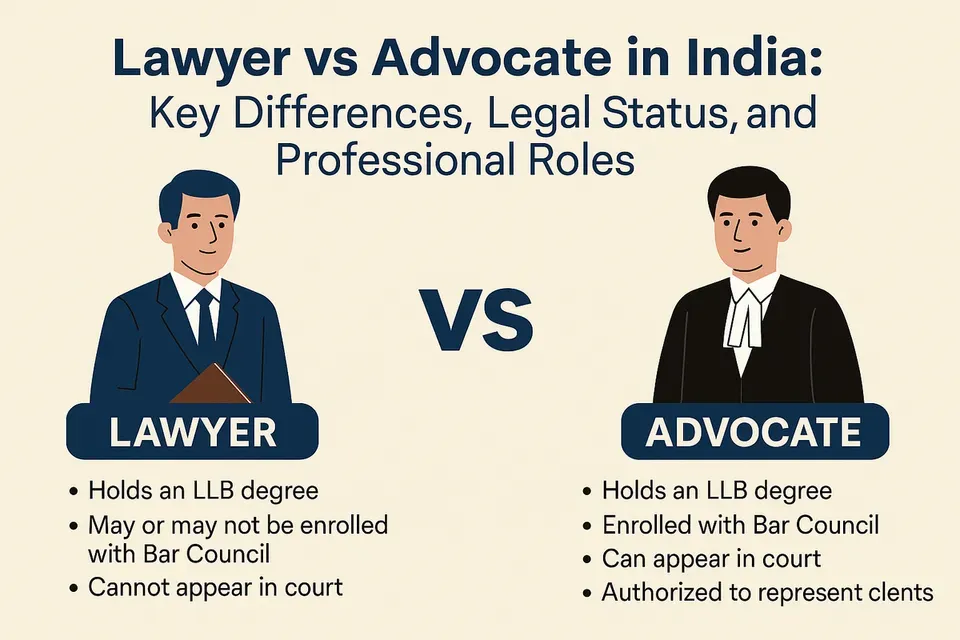
The difference between lawyer and advocate lies mainly in their certification and eligibility to appear before a judge. While many people ask how to become a lawyer, the journey to becoming an advocate requires an extra layer of licensing.
-
Qualification: A lawyer holds an LLB degree; an advocate holds an LLB and is enrolled with the Bar Council.
-
Court Eligibility: Lawyers cannot represent clients in court; advocates are legally authorized to do so.
-
Scope of Work: Lawyers are often limited to advisory roles, whereas advocates handle litigation.
How to Become a Lawyer in India
Becoming a lawyer involves enrolling in and completing a formal education in law. Follow these steps to understand how to become a lawyer in India:
1. Educational Qualifications
Complete Class 12 education from any recognized board. You can then pursue a 5-year integrated program (like BA LLB) or a 3-year LLB program if you already hold a graduation degree. This academic phase is the core of how to become a lawyer.
2. Internships
Law students are encouraged to work with law firms or senior practitioners. Practical exposure is as important as theory when learning how to become a lawyer.
3. Graduation
After passing all exams, one becomes a law graduate, formally known as a lawyer. To manage the rising costs of higher education, many students and their families rely on the flexible financing options provided by Bajaj Finserv.
How to Become an Advocate in India
Once you have mastered how to become a lawyer, the transition to an advocate involves:
-
Enrollment: Register with the State Bar Council.
-
AIBE Exam: Clear the All India Bar Examination to obtain a "Certificate of Practice."
-
Licensing: Once licensed, you can legally argue cases in any court across the country.
Career Prospects and Financial Support
The career responsibilities for lawyers and advocates vary based on their chosen path. Lawyers often work as corporate consultants or legal advisors, while advocates climb the ladder to higher courts. Regardless of the path, professional growth often requires investment. Bajaj Finserv offers professional loans for advocates with minimal documentation and attractive interest rates, helping them focus on their clients while the financial logistics are taken care of.
Conclusion
The difference between lawyer and advocate in India is significant. While a lawyer is someone who has completed the educational requirements, an advocate has the official license to litigate. For anyone wondering how to become a lawyer, the path is clearly defined through academic excellence and professional licensing. By understanding these distinctions and utilizing the right financial support from Bajaj Finserv, aspiring legal minds can build a successful and stable career in the Indian judicial system.
0 Comments:
Leave a Reply