Product Configurators: Technology Transforming Customization
-

- by navyuggalani,
- March 02, 2026
- in technology,
The digital revolution has fundamentally changed consumer expectations. Today's shoppers don't just want products. They want products that reflect their unique preferences, fit their specific needs, and express their individual style. This shift has made the product configurator one of the most transformative technologies in modern e-commerce, bridging the gap between mass production and personalized manufacturing.
Understanding Product Configurators
A configurator is an interactive software tool that allows customers to customize products in real-time by selecting from various options, features, and specifications. Unlike traditional shopping, where customers choose from pre-made items, configurators empower users to become co-designers, making decisions about colors, materials, dimensions, features, and functionalities that result in truly personalized products.
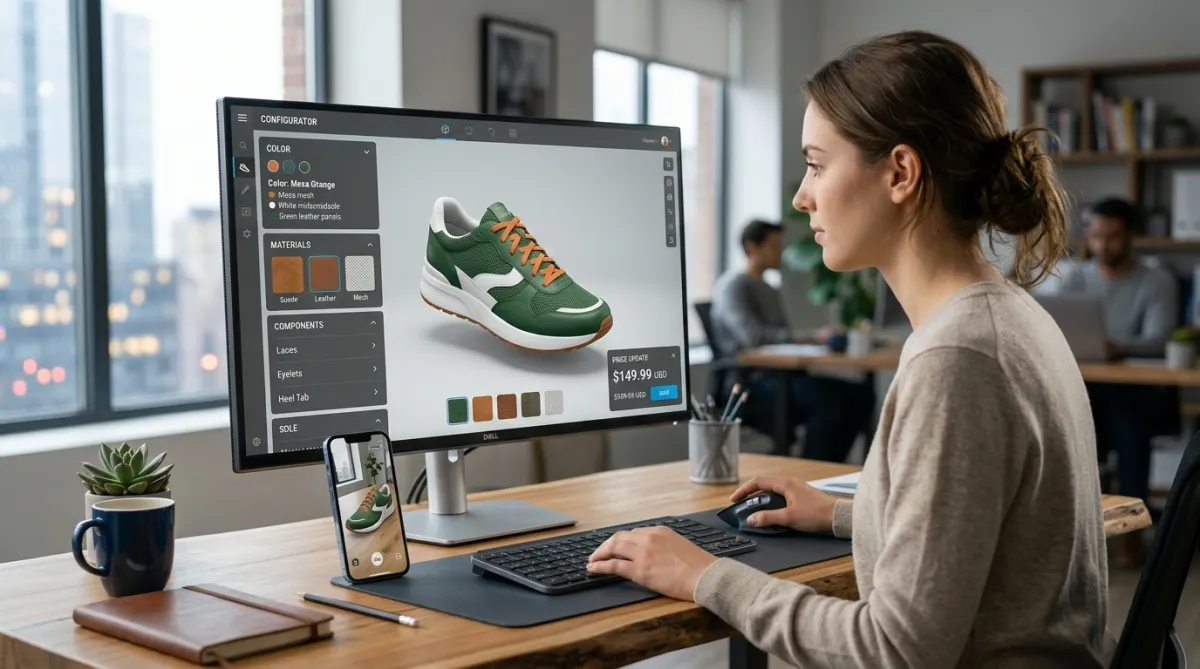
The technology works by presenting customers with a visual interface where each selection immediately updates the product display and price. Whether it's customizing a laptop with specific processor speeds and memory configurations, designing a custom piece of furniture, or personalizing athletic shoes with unique color combinations, configurators make complex customization feel intuitive and engaging.
The Rise of 3D Product Configurators
While early configurators relied on simple dropdown menus and 2D images, the emergence of 3D product configurators has revolutionized the customer experience. These advanced systems create photorealistic, interactive 3D models that customers can rotate, zoom, and examine from every angle.
The impact is substantial. According to industry research, businesses implementing 3D configurators report conversion rate increases of 30-40% compared to traditional product pages. Return rates drop by approximately 25% because customers have a clearer understanding of exactly what they're purchasing. These aren't just incremental improvements. They represent fundamental shifts in how online commerce operates.
Real-World Applications
Consider the furniture industry. Companies like IKEA and numerous custom furniture makers use 3D product configurators to let customers design entire room layouts. Customers select sofa dimensions, fabric types, cushion configurations, and leg styles while seeing their creation rendered in realistic 3D. They can place the configured furniture virtually in their own space using augmented reality, eliminating the uncertainty that traditionally plagued furniture purchases.
In the automotive sector, virtually every major manufacturer offers sophisticated configurators allowing customers to build their ideal vehicle. From exterior paint colors and wheel designs to interior materials and technology packages, these systems handle thousands of possible combinations while ensuring only valid, manufacturable configurations are possible.
The fashion and footwear industries have embraced configurators enthusiastically. Nike's Nike By You platform allows customers to customize popular shoe models with personalized color combinations, materials, and even custom text. This level of personalization creates emotional connections that translate to brand loyalty and premium pricing. Customers willingly pay 20-30% more for customized products than standard versions.
The Technology Stack Behind Configurators
Modern product configurators represent sophisticated technological achievements, combining multiple systems into seamless experiences:
Frontend Visualization: Advanced WebGL-based rendering engines create smooth, responsive 3D graphics that work directly in web browsers without requiring downloads or plugins. Frameworks like Three.js and Babylon.js power these visualizations, delivering console-quality graphics through standard web technologies.
Backend Logic: Complex rule engines validate every customer selection, ensuring compatibility between components. If a customer selects a specific engine for a configured vehicle, the system automatically filters transmission options to show only compatible choices. These constraint-based systems prevent configuration errors while guiding customers toward viable combinations.
Pricing Engines: Real-time calculation systems determine prices based on material costs, manufacturing complexity, and business margins. As customers add features or upgrade materials, prices update instantly transparency that builds trust and helps customers make informed decisions.
Database Management: Product configurators manage enormous data volumes, thousands of components, hundreds of thousands of possible combinations, real-time inventory levels, and pricing matrices. Graph databases efficiently handle these complex relationships, enabling instant retrieval despite the data complexity.
Business Impact and Benefits
The implementation of configurators delivers measurable benefits across multiple dimensions:
Increased Revenue: Customized products command premium pricing. Studies show customers pay 20-48% more for personalized products compared to standard alternatives. This price premium directly impacts profit margins since configurators often connect to efficient made-to-order manufacturing systems.
Reduced Returns: When customers configure products themselves, they take ownership of design decisions. This psychological investment, combined with accurate visualization of the final product, reduces return rates significantly. One furniture retailer reported returns dropping from 18% to just 4% after implementing a 3D configurator.
Enhanced Customer Data: Every configuration session generates valuable behavioral data. Businesses learn which features customers value most, where they abandon the configuration process, and which combinations prove most popular. This intelligence informs product development, inventory planning, and marketing strategies.
Competitive Differentiation: In crowded markets, the ability to offer customization becomes a powerful differentiator. Customers increasingly expect personalization options, and companies offering sophisticated configurators gain competitive advantages over competitors with standard catalogs.
Mobile Optimization: Configurators in Your Pocket
With mobile commerce representing over 70% of e-commerce traffic, configurators must perform flawlessly on smartphones. This presents unique challenges; smaller screens, variable network conditions, and diverse device capabilities require thoughtful optimization.
Modern mobile configurators employ progressive web app (PWA) technology, creating app-like experiences that work through web browsers. Touch-optimized controls replace mouse interactions, vertical scrolling interfaces accommodate narrow screens, and adaptive rendering adjusts visual quality based on device capabilities.
The most innovative mobile configurators integrate augmented reality, allowing customers to visualize configured products in their actual environments through smartphone cameras. This AR capability transforms configurators from design tools into decision-making assistants, dramatically reducing purchase hesitation.
Artificial Intelligence Integration
AI technology increasingly enhances configurator capabilities. Machine learning algorithms analyze thousands of successful configurations to suggest complementary options and predict customer preferences. Some systems employ computer vision to analyze uploaded photos, recommending products and configurations that match existing décor or style preferences.
Natural language processing enables voice-controlled configuration. Customers can say "show me in navy blue" or "increase the width by six inches," making customization more accessible and intuitive.
Manufacturing and Supply Chain Integration
Effective configurators don't just capture customer preferences. They transmit those specifications directly to manufacturing systems. This integration enables true made-to-order production, where custom products move from configuration to production without manual intervention.
ERP (Enterprise Resource Planning) system integration ensures that configured orders trigger appropriate material procurement, production scheduling, and logistics planning. This automation reduces order processing time while eliminating transcription errors that plagued earlier customization approaches.
Sustainability Advantages
Interestingly, product configurators contribute to more sustainable business practices. Made-to-order production eliminates inventory waste. Companies manufacture only what customers actually order. This approach reduces overproduction, minimizes unsold inventory ending up in landfills, and optimizes material usage.
Some advanced configurators display environmental impact metrics, showing how different material choices affect carbon footprint, recyclability, and overall sustainability. This transparency helps environmentally conscious consumers make informed decisions while encouraging eco-friendly selections.
Implementation Considerations
Businesses considering configurator implementation should evaluate several factors:
Product Complexity: Configurators work best for products with multiple options but not overwhelming complexity. Too few options don't justify the investment; too many overwhelm customers.
Manufacturing Flexibility: Effective configurators require production systems capable of efficiently handling custom orders. Companies with rigid manufacturing processes may need operational changes before configurator implementation delivers full value.
Technical Infrastructure: Sophisticated configurators demand robust technical architecture, powerful servers, reliable databases, and scalable cloud infrastructure. Companies must invest in both technology and talent to build and maintain these systems.
User Experience Design: Technology alone doesn't guarantee success. Intuitive interfaces, clear guidance, and thoughtful user flows transform powerful capabilities into delightful experiences that customers actually enjoy using.
The Future of Configuration Technology
Emerging technologies promise even more sophisticated configurator capabilities. Virtual reality showrooms will let customers fully immerse themselves in configured environments. Haptic feedback technology might allow customers to "feel" different materials through their devices. Blockchain could provide immutable records of custom product specifications, particularly valuable for luxury and collectible items.
Quantum computing may enable real-time physics simulations showing how configured products perform under various conditions. Advanced AI could serve as personal design assistants, learning individual preferences over time and proactively suggesting configurations aligned with customer taste.
Conclusion: The Personalization Imperative
The configurator has evolved from a novelty feature to an essential component of modern commerce. As consumers increasingly expect personalized experiences across all aspects of their lives, the ability to offer meaningful customization becomes not just a competitive advantage but a business necessity.
The technology enables win-win scenarios, customers get products perfectly matched to their needs and preferences, while businesses capture premium pricing, reduce returns, and gain valuable customer insights. As configurator technology continues advancing, the line between mass production and bespoke craftsmanship will continue blurring, democratizing personalization that was once available only to the wealthy few.
For businesses evaluating whether to implement configurators, the question isn't whether customization matters. It's whether they can afford to let competitors own this increasingly critical customer expectation. The technology exists, the business case is proven, and the customer demand is clear. The transformation is already underway.
0 Comments:
Leave a Reply