Organic marketing in real estate lead generation refers to unpaid strategies that build traffic over time, including SEO, content marketing, social media growth, email nurturing, and referral systems that generate consistent inbound property inquiries.
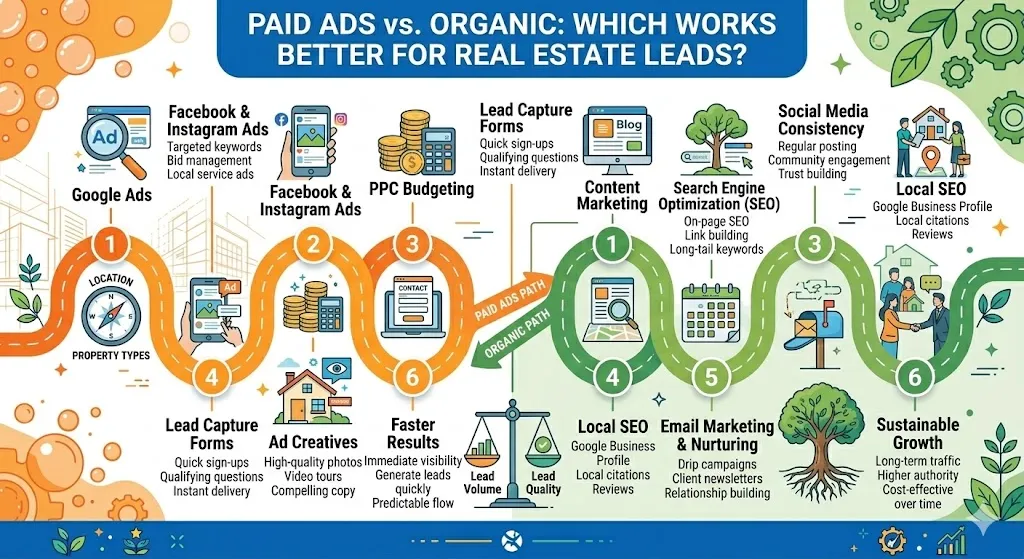
Paid Ads vs Organic: Which Works Better for Real Estate Leads?
-

- by ryanwilson,
- March 02, 2026
- in business,
Real estate is one of the most competitive industries for lead acquisition. High transaction values call for strong marketing budgets. Every serious agent or brokerage has the same key question:
Should you pay for ads or use organic methods to get leads?
The answer is not binary. Each channel serves a distinct role in a sustainable growth strategy. This article compares paid ads and organic marketing. It looks at performance, cost, scalability, and long-term ROI. This way, you can make a smart choice.
Understanding Paid Advertising in Real Estate
Paid advertising refers to traffic you get by spending money on platforms such as:
-
Google Search Ads
-
Facebook & Instagram Ads
-
YouTube Ads
-
Real estate listing portals
-
Display and retargeting networks
With paid ads, you are essentially purchasing visibility. When someone types “homes for sale in [city]” or looks at property listings online, your ad shows up. This happens if your bid and targeting are strong.
Advantages of Paid Ads
1. Immediate Traffic, Paid campaigns generate visibility instantly. Once approved, your ads start driving traffic within hours.
2. Predictable Scaling, If a campaign performs well, you can increase the budget and scale results.
3. Precise Targeting, You can target by location, demographics, behavior, income bracket, and even life events.
4. Great for Listings and Launches, New property listings or urgent promotions get quick visibility.
But, paid ads come with inherent risks.
Limitations of Paid Ads
-
High cost per click (CPC) in competitive markets
-
Lead quality varies significantly
-
Traffic stops when spending stops
-
Requires continuous optimization
In big cities, the cost per lead can rise fast, especially for buyer keywords.
Understanding Organic Lead Generation
-
Search Engine Optimization (SEO)
-
Content marketing (blogs, guides, neighborhood pages)
-
Social media growth
-
Email marketing
-
Referral and word-of-mouth systems
Organic strategies focus on building long-term digital authority.
Advantages of Organic Marketing
1. Compounding Returns A well-optimized article or landing page can generate leads for years.
2. Lower Cost Per Lead (Long-Term) Once ranked, traffic does not must ongoing ad spend.
3. Higher Trust Factor Consumers often trust organic results more than ads.
4. Strong Brand Authority Content builds credibility and expertise positioning.
But, organic growth requires patience.
Limitations of Organic Marketing
-
Slower results (3–6+ months for meaningful traction)
-
Requires consistent content production
-
SEO competition is intense in real estate markets
-
Algorithm updates can impact rankings
Organic strategies demand long-term commitment rather than quick wins.
Cost Comparison: Paid vs Organic
Let’s check both approaches from a financial perspective.
Paid Ads Cost Structure
-
Pay per click (CPC)
-
Pay per impression (CPM)
-
Creative production cost
-
Landing page optimization
-
Campaign management
Real estate keywords often command premium pricing due to high transaction values.
Organic Cost Structure
-
Website development
-
SEO optimization
-
Content creation
-
Technical maintenance
-
Link building
Organic investment is upfront-heavy but decreases proportionally over time.
Key Insight: Paid ads function as an expense. Organic marketing functions as a digital asset.
Speed vs Sustainability
One of the clearest differences between the two strategies is the time horizon.
Factor Paid Ads Organic Speed of Results Immediate Slow Build Long-Term ROI Moderate High Scalability Budget Dependent Authority Dependent Sustainability Stops Without Spend Compounding Growth
If you need leads this month, paid ads are effective. For steady leads in a year without rising costs, go organic.
Lead Quality Comparison
Not all leads are equal.
Paid Leads
Often colder prospects. Many users click ads with little intention or purpose. Conversion depends on the landing page's quality. It also depends on the speed at which someone takes follow-up actions.
Organic Leads
Typically higher intent. A user who discovers your blog, reads several articles, and reaches out to you is more likely to buy.
Organic traffic usually brings in warmer leads. This happens because potential customers trust your brand before they reach out.
When Paid Ads Work Best
Paid advertising is effective to a great extent when:
-
You are launching a new brokerage
-
You have a new property listing
-
You operate in a highly transactional market
-
You want to dominate a local geographic area quickly
-
You have optimized follow-up systems
Paid ads work best with retargeting strategies. This keeps you visible to visitors who didn’t convert at first.
When Organic Marketing Works Best
Organic strategies are ideal when:
-
You want predictable long-term growth
-
You are building personal brand authority
-
You want inbound seller leads
-
You aim to reduce long-term acquisition costs
-
You plan to scale sustainably
Neighborhood guides and relocation content help attract buyers. Market reports and SEO landing pages bring in seller inquiries.
The Hybrid Model: The Most Effective Strategy
The most successful real estate professionals do not choose one—they combine both.
Here’s how a hybrid strategy functions with great effectiveness:
-
Use paid ads for immediate lead flow
-
Invest in SEO and content for long-term authority
-
Retarget organic visitors with paid ads
-
Capture email leads and nurture them
-
Reduce paid dependency as organic traffic increases
Paid traffic accelerates momentum. Organic marketing stabilizes and compounds growth.
Performance Metrics to Track
Regardless of strategy, track measurable KPIs:
-
Cost Per Lead (CPL)
-
Lead-to-Appointment Ratio
-
Appointment-to-Deal Conversion
-
Customer Acquisition Cost (CAC)
-
Return on Ad Spend (ROAS)
-
Organic Traffic Growth Rate
Data-driven decisions outperform emotional marketing decisions every time.
Risk Assessment
Paid Ads Risk
-
Budget burnout without proper optimization
-
Over-reliance on platform algorithms
-
Rising CPC over time
Organic Risk
-
Delayed ROI
-
SEO volatility
-
Inconsistent content output
Mitigating risk requires diversification.
Strategic Recommendation
If your cash flow is stable, then focus on building organic authority. This will help lower long-term acquisition costs.
The hybrid model beats both strategies on their own. This leads to lasting success in competitive markets.
Final Verdict: Which Works Better?
There is no universal winner.
-
Paid ads win on speed and predictability
-
Organic marketing wins on sustainability and long-term ROI
-
Hybrid strategy wins
Real estate is a relationship-driven industry. The goal is not generating leads—it is building trust, authority, and consistent deal flow.
Combining paid visibility with organic authority can build a strong lead generation engine. If done right, this strategy grows over time instead of starting fresh each month.
In a competitive industry, client acquisition is key to success. So, finding the right mix of paid and organic marketing is crucial for growth.
0 Comments:
Leave a Reply