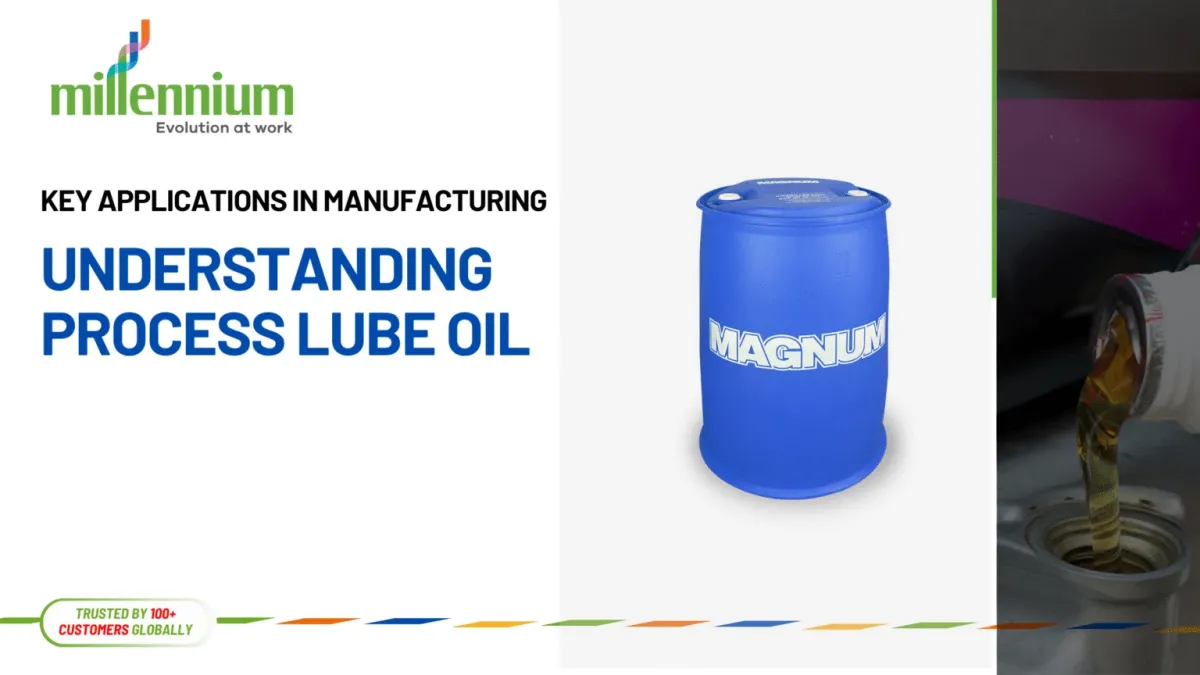
Understanding Process Lube Oil: Key Applications in Manufacturing
In modern manufacturing, smooth operation is not just about powerful machinery—it’s about the right lubrication. One of the most versatile and widely used lubricants in industrial environments is Process Lube Oil (PLO). Though it may not always receive the spotlight like engine oils or hydraulic fluids, process lube oil plays a critical role in ensuring product quality, operational efficiency, and equipment longevity across multiple industries.
Let’s explore what process lube oil is, why it works so effectively, and where it is commonly used.
What Is Process Lube Oil?
Process Lube Oil (PLO) is a specially refined petroleum-based oil designed for use in manufacturing and industrial processes. Unlike engine oils that focus on reducing friction in combustion systems, process oils are primarily used as processing aids, plasticizers, extenders, or carriers in product formulation.
These oils are highly refined to offer:
-
Excellent thermal stability
-
Low volatility
-
Good compatibility with polymers and chemicals
-
Controlled viscosity
Depending on the refining process, PLO may be paraffinic, naphthenic, or aromatic in nature. The choice depends on the intended industrial application and performance requirements.
Why It Works
Process lube oil works effectively because of its chemical compatibility and stability. It blends seamlessly with raw materials like rubber, plastics, and chemical compounds without negatively affecting product properties.
Here’s why it stands out:
-
Improves Flexibility: Acts as a plasticizer, enhancing elasticity in rubber and polymer products.
-
Enhances Processability: Reduces friction and heat generation during mixing and molding.
-
Improves Surface Finish: Helps achieve uniform texture and finish in end products.
-
Thermal Stability: Maintains consistency even under high manufacturing temperatures.
-
Cost Efficiency: Acts as an extender, reducing raw material costs without compromising performance.
Its balanced composition ensures it doesn’t react undesirably with additives or degrade during production.
Where It’s Used
Process lube oil finds applications across diverse industries. Let’s break down some of the key sectors.
Rubber Manufacturing
In rubber production, process oil is essential for blending raw rubber with fillers, accelerators, and other additives. It enhances flexibility, softness, and durability in products like:
-
Tires
-
Conveyor belts
-
Footwear
-
Industrial hoses
By improving dispersion and reducing internal friction, process lube oil ensures consistent compound quality and easier molding.
Plastics & Polymers
In plastic manufacturing, PLO acts as a plasticizer and processing aid. It improves flow properties during extrusion and injection molding.
Applications include:
-
PVC products
-
Plastic films
-
Cables and wire insulation
-
Synthetic resins
By enhancing polymer compatibility, process oil helps manufacturers achieve better tensile strength, flexibility, and finish.
Textiles
In textile manufacturing, process oils are used in fiber production and lubrication of machinery. They help reduce static build-up and friction during spinning and weaving.
Benefits include:
-
Smoother fiber processing
-
Reduced thread breakage
-
Improved fabric texture
Specialized process oils ensure minimal staining and easy removal during washing.
Chemical Production
Process lube oil also plays a role in chemical formulation. It is used as:
-
A carrier oil
-
A blending medium
-
A diluent in specialty chemical products
Its stable chemical structure ensures it doesn’t interfere with reactions while maintaining viscosity and flow consistency.
Other Cool Uses
Beyond mainstream industries, process lube oil has several additional applications:
-
Adhesives and Sealants: Improves flexibility and workability.
-
Printing Inks: Enhances consistency and smooth application.
-
Agricultural Formulations: Used as a carrier in pesticides and agrochemical blends.
-
Metal Processing: Acts as a processing aid in certain forming and finishing operations.
Its adaptability makes it one of the most versatile industrial oils available.
Why MAGNUM PLO Deserves a Shoutout
When discussing reliable process oils, MAGNUM PLO from Millennium Group deserves special mention. Known for its consistent quality and performance, MAGNUM PLO is formulated to meet demanding industrial standards.
Key advantages include:
-
High purity and stable viscosity
-
Excellent compatibility with rubber and polymers
-
Low aromatic content for safer handling
-
Enhanced thermal stability
-
Consistent batch-to-batch quality
Manufacturers prefer MAGNUM PLO for its dependable performance in rubber, plastic, and chemical processing applications. It supports operational efficiency while maintaining product integrity.
How to Store, Handle, and Blend Like a Pro
Even the best process lube oil requires proper handling to maintain its performance.
Storage Tips
-
Store in a clean, dry area away from direct sunlight.
-
Keep drums tightly sealed to prevent contamination.
-
Maintain stable ambient temperatures.
Handling Guidelines
-
Use clean transfer equipment to avoid mixing impurities.
-
Label containers clearly to prevent cross-contamination.
-
Follow safety guidelines and use appropriate PPE.
Blending Best Practices
-
Add process oil gradually during mixing.
-
Ensure uniform dispersion using proper agitation systems.
-
Test viscosity and compatibility before large-scale production.
Routine quality checks help maintain consistency in finished products and prevent processing issues.
Final Take
Process Lube Oil may operate behind the scenes, but its impact on manufacturing is undeniable. From improving rubber flexibility to enhancing plastic flow and supporting chemical blending, it plays a foundational role in modern production systems.
Its ability to improve process efficiency, reduce costs, and enhance product quality makes it indispensable across industries. With high-quality solutions like MAGNUM PLO from Millennium Group, manufacturers can achieve reliable performance and long-term operational benefits.
In today’s competitive industrial landscape, choosing the right process oil isn’t just about lubrication—it’s about ensuring precision, productivity, and performance at every stage of manufacturing.

0 Comments:
Leave a Reply