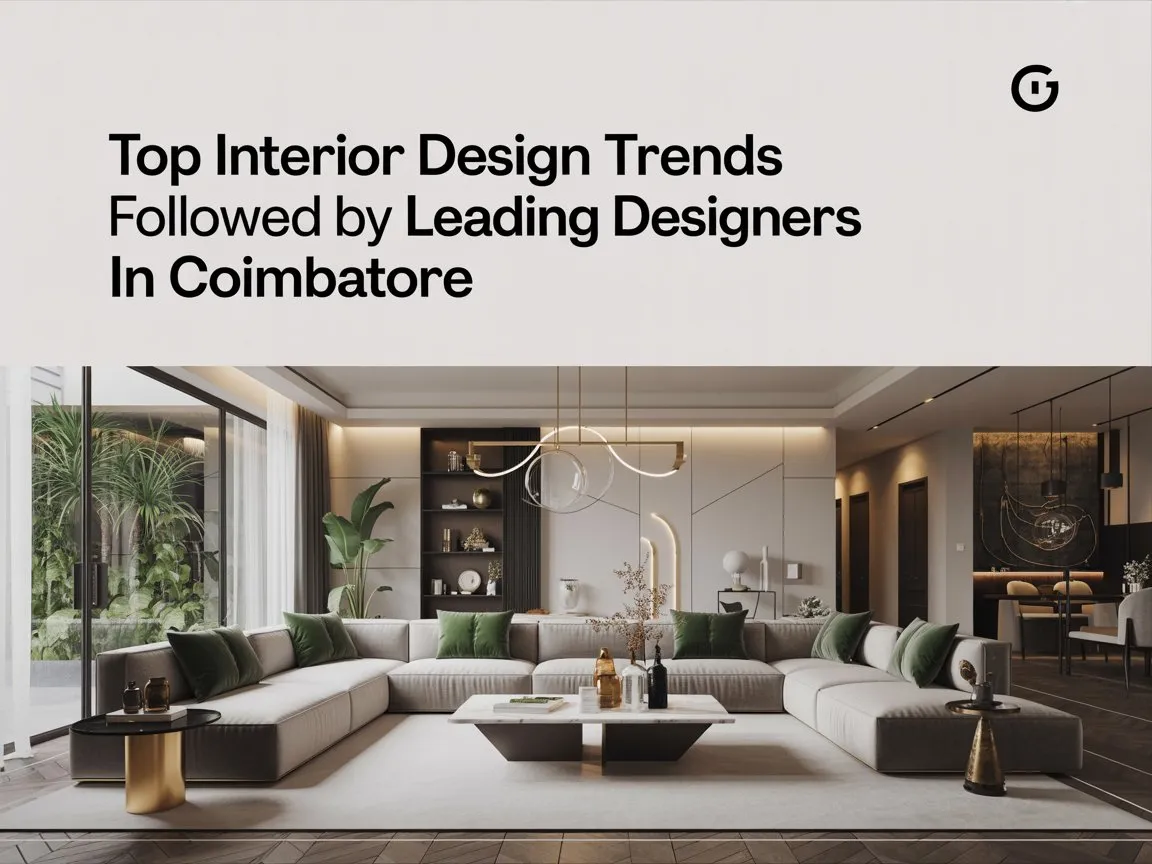
Top Interior Design Trends Followed by Leading Designers in Coimbatore
I have been working on home interiors and commercial spaces in Coimbatore for over a decade now. In that time, I have sat across the table from hundreds of homeowners — young couples moving into their first apartment in Peelamedu, families upgrading their independent homes in R.S. Puram, business owners designing office spaces in Gandhipuram. Every single one of them has taught me something about what people here actually want from their spaces.
What I notice most is that Coimbatore homeowners are no longer just asking for "something that looks nice." They are asking why. Why this material? Why this layout? Will this work for my family's daily routine? That shift — from purely aesthetic decisions to thoughtful, practical ones — has changed how I approach every project. And honestly, it has made the work far more interesting.
Here is what I am seeing on the ground right now, from actual projects and real conversations with clients across the city.
Warm Minimalism is Replacing Cold Minimalism
For a few years, everyone wanted the stark white walls, the bare surfaces, the all-white kitchen. It looked great in photographs but felt cold to live in. I had clients call me six months after completion saying the house felt more like a showroom than a home.
What is working now is what I call warm minimalism. Soft sand tones, warm whites, muted terracotta on an accent wall. Functional furniture that does not crowd the room but still feels substantial. Linen cushions, a jute rug, a solid wood coffee table. The space stays uncluttered, but it breathes warmth. Families are actually comfortable sitting in these rooms, which is the whole point.
Natural Materials are Becoming a Preferred Choice
This trend has stayed consistent for the past three years and shows no sign of slowing. Clients are asking specifically for wood textures, cane furniture, stone finishes on countertops and feature walls. There is a genuine appreciation for materials that age well and feel real underfoot or underhand.
I recently completed a 3BHK apartment in Saravanampatti where we used cane chairs in the dining area, a rough-hewn stone finish on the TV wall, and cotton drapes throughout. The client's exact words were, "It feels like a home, not a hotel." That reaction is increasingly common. People are also becoming more conscious about sustainability — asking about locally sourced wood, low-VOC paints, and materials that do not harm the environment. It is not just trend-following; some clients genuinely care about the choices they make.
Open Layouts with Better Airflow
This one is specific to Coimbatore in a very direct way. The city gets warm. March to June can be genuinely harsh, and even in other months, cross ventilation matters more than people in cooler cities might understand. When I am planning a layout here, airflow is never an afterthought.
I push for open kitchen concepts wherever the floor plan allows. I keep living areas free of unnecessary partition walls that block the breeze. Large windows, sometimes floor-to-ceiling where the orientation works, make a real difference — both for ventilation and for pulling in natural light. Clients who have moved from older closed-plan homes to open layouts consistently tell me they feel the difference in temperature and in mood. It is a straightforward improvement that also happens to look good.
Functional Storage is Now a Priority
Apartment sizes in Coimbatore have grown more compact over the years, especially in the mid-range segment. A 2BHK that comfortably held a joint family fifteen years ago now needs to work harder for a nuclear family with two working parents and a child. Storage is no longer a nice-to-have.
Hidden storage under bed platforms, pull-out drawers in kitchen plinths, floor-to-ceiling wardrobes designed around actual clothing habits — these are requests I get on nearly every residential project now. Multipurpose furniture like ottomans with storage, study units with integrated shelving, and wall-mounted shelves that double as display areas have become standard rather than special. The focus is on keeping the home functional without it looking like a storage unit.
Traditional Elements with a Modern Touch
This is where Coimbatore interiors start to look distinctly different from what you see in design magazines from Mumbai or Delhi. There is a strong cultural pride here, and many clients want their homes to carry some of that identity.
I have used Athangudi-inspired tile patterns in entryways, teak wood panels on headboards, and brass door handles and fixtures that bring a traditional warmth without making the space feel dated. South Indian homes often have a pooja room or a dedicated spiritual corner — designing that space with care, using materials like rosewood and brass lamps against clean white walls, creates something that is both personally meaningful and visually considered.
The balance is in not overdoing it. One or two strong traditional elements in a modern space create character. Too many, and it can feel confused. Getting that balance right is something I spend real time thinking about on every project.
Personalized Spaces are Taking Over
The years of working from home changed what people expect from their interiors permanently. A spare bedroom that previously sat unused is now a priority zone. I have designed reading corners in living rooms, compact but fully functional home office setups tucked into bedroom alcoves, dedicated art corners for children, and in one particularly satisfying project, a small music room for a retired teacher in Tatabad who had wanted one for thirty years.
These personalized spaces tell me more about what people value than any design trend report does. Homeowners want their space to reflect who they are and how they actually live, not just how they imagine they might live.
Earthy Colors and Texture-Rich Interiors
The demand for color has shifted noticeably toward the earth spectrum. Terracotta, olive green, muted beige, warm charcoal. These colors work well in Coimbatore homes because they complement the natural light here without washing out in the heat of the afternoon sun.
Textured walls — whether through Venetian plaster, exposed brick finish, or rough lime wash — add depth to a room that a flat-painted wall simply cannot. Layered lighting ties it together: a warm ceiling light, a focused task light, a small decorative lamp in the corner. When these elements come together, the room feels considered rather than decorated.
Smart Home Integration with Design
More clients are asking for smart home features now, but the request has changed. Earlier it was about showing off the technology. Now the ask is to hide it. Hidden conduit planning, recessed smart lighting, automated curtains that operate quietly on a schedule, USB charging points built into skirting boards. The technology needs to work without announcing itself at every corner.
On a recent commercial project, we integrated motion-sensor lighting throughout the workspace with no visible switches on the main walls. The client's visitors rarely notice it immediately, but they always feel the thoughtfulness of the space. That is exactly what good integration should do.
Why Local Design Understanding Matters
The reason I think working with experienced interior designers in Coimbatore makes a real difference is this: the city has its own rhythm. The climate demands certain material choices. The lifestyle — joint families, frequent guests, long evenings on the balcony — shapes how spaces need to function. The local market for materials and craftsmen is specific, and knowing where to source quality work at honest prices comes only with time spent here.
A beautiful design on paper that ignores cross ventilation, or uses materials that warp in the local humidity, or does not account for the way families here actually use their homes — that design fails in practice regardless of how good it looks. Local knowledge is not a small thing. It is foundational.
Closing Thoughts
Trends shift every couple of years, and I have watched several come and go. What does not change is that people want their homes to feel comfortable, to work for their daily lives, and to carry something of themselves in the design.
The projects I am most proud of are not the ones that looked most impressive in a portfolio photograph. They are the ones where the client called me three years later to say the kitchen still works perfectly, the children love their room, and guests always ask who designed the place. That, to me, is what a well-designed home actually is.

0 Comments:
Leave a Reply