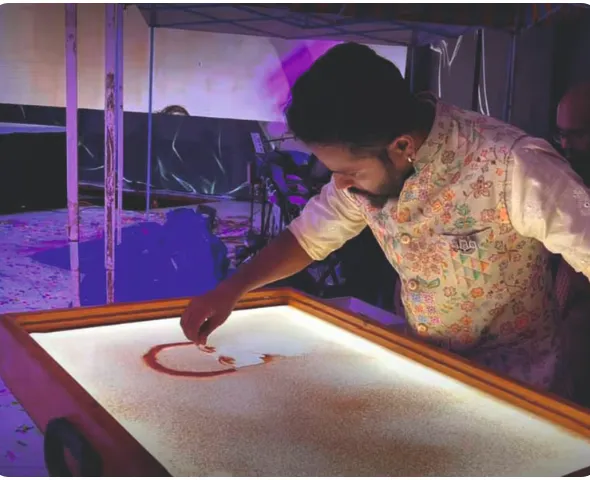

Sand portrait art is a unique and creative form of artistic expression where artists create human faces and portraits using sand as their primary material. This art form combines sculpture, drawing, and creativity to represent facial features such as eyes, nose, lips, and expressions using loose sand or sculpted sand structures. Sand portraits can be created on beaches, riverbanks, stages, or even on specially prepared platforms. Because sand is a temporary medium, sand portraits are often admired for their beauty, creativity, and the skill required to create them in a short time.
The process of making a sand portrait requires patience, precision, and imagination. Artists begin by preparing the sand surface. Usually, wet sand is used because it sticks together better and allows the artist to shape details easily. The artist smooths the sand and marks the outline of the face using simple tools such as sticks, brushes, or small sculpting tools. Once the outline is ready, the artist gradually adds details, shaping the facial structure and highlighting areas such as cheekbones, eyes, hair, and shadows.
Many sand portrait artists rely on shading techniques to create realistic expressions. By adding or removing small amounts of sand, they can create light and shadow effects that make the portrait look lifelike. Some artists use their fingers for delicate adjustments, while others use small tools like spoons, knives, or brushes to refine details. In some cases, colored sand or lighting effects are used to enhance the visual impact of the portrait.
Sand portraits are often created to honor famous personalities, leaders, cultural icons, or social heroes. Artists may create portraits of well-known figures such as national leaders, film stars, or historical personalities. In India, sand artists frequently create portraits during festivals, public awareness campaigns, or cultural programs. These portraits may convey messages related to peace, environmental protection, or national pride. For example, sand portraits of freedom fighters or social reformers are sometimes displayed during national celebrations.
Live sand portrait performances are also popular at cultural events, exhibitions, and stage shows. In these performances, the artist creates a portrait in front of an audience, often accompanied by music or storytelling. The audience watches as the face gradually appears from the sand, which creates excitement and admiration. These performances highlight the artist’s speed, creativity, and mastery of the medium.
One of the most remarkable aspects of sand portrait art is its temporary nature. Unlike paintings or stone sculptures that last for years, sand portraits can be destroyed easily by wind, water, or human movement. This impermanence gives sand art a special beauty, reminding viewers that art can be meaningful even if it does not last forever. Many artists photograph or record their sand portraits to preserve their work before it disappears.
Sand portrait art also plays an important role in tourism and cultural promotion. Beaches known for sand sculptures often attract visitors who want to see impressive sand portraits and sculptures. Festivals and competitions encourage artists from different regions to showcase their skills and creativity. These events help promote artistic talent and inspire new generations of artists to explore sand as a creative medium.
In addition, sand portrait art can be a powerful storytelling tool. By creating expressive faces and emotional expressions, artists can communicate stories without using words. A single sand portrait can represent happiness, sorrow, courage, or hope. Because of this emotional impact, sand portrait art is often used in social campaigns to raise awareness about issues such as environmental protection, public health, or social unity.
In conclusion, sandart indian is a fascinating blend of creativity, skill, and imagination. It transforms simple grains of sand into expressive human faces that capture attention and emotion. Although these portraits are temporary, their artistic value and emotional impact remain in the memories of viewers. Through dedication and creativity, sand portrait artists continue to inspire people and demonstrate the beauty that can be created from one of nature’s simplest materials—sand.
0 Comments:
Leave a Reply