What Is PMI (Purchasing Managers’ Index)?
-

- by accountinglads,
- February 02, 2026
- in services,
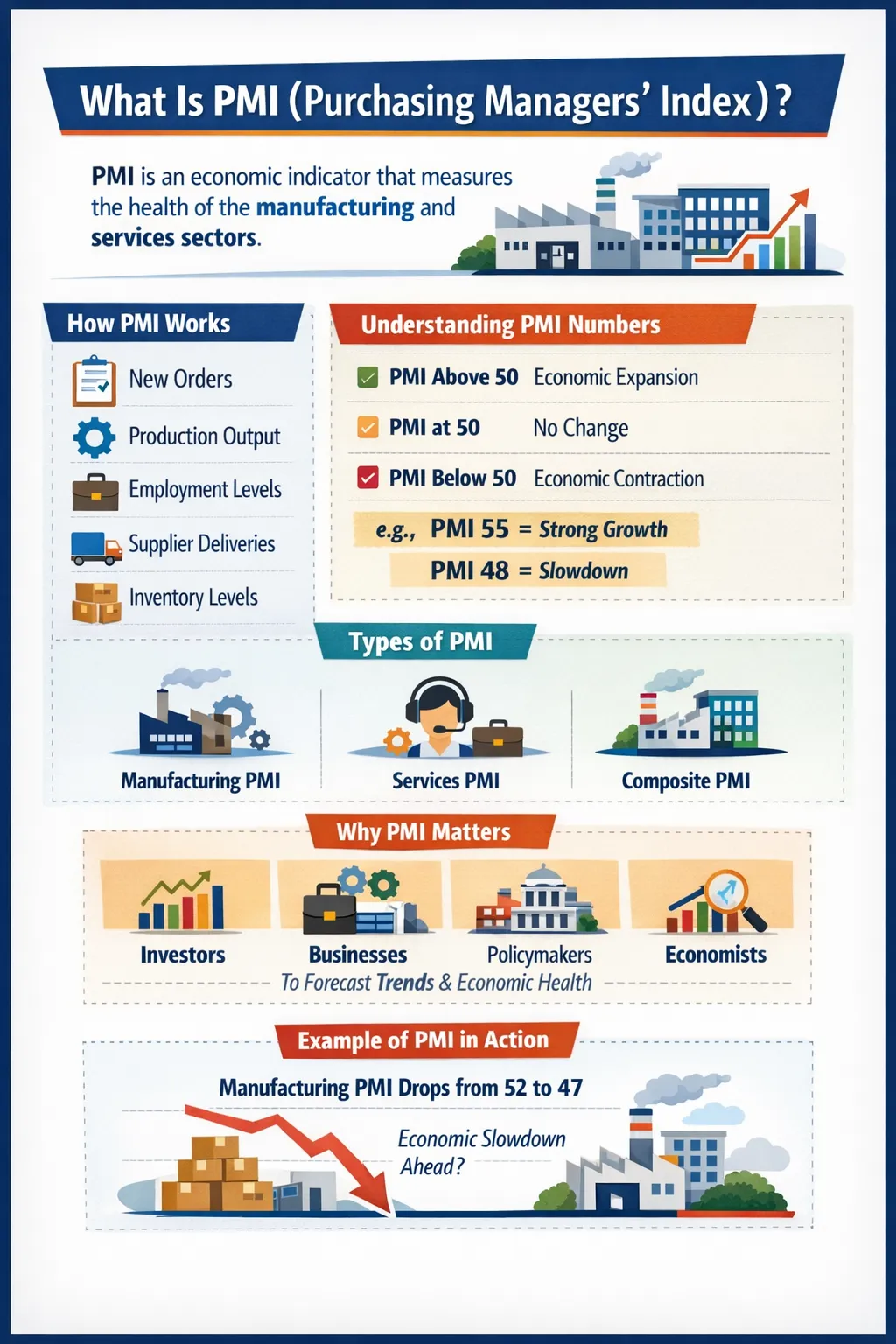
PMI, or Purchasing Managers’ Index, is an economic indicator that measures the health of a country’s manufacturing and services sectors. It is based on monthly surveys of purchasing managers, who are among the first to see changes in business conditions.
Because purchasing managers deal directly with suppliers, inventories, and production schedules, PMI is considered a leading indicator of economic trends.
How PMI Works
PMI is calculated from survey responses covering key business areas such as:
-
New orders
-
Production output
-
Employment levels
-
Supplier delivery times
-
Inventory levels
Each component is weighted and combined into a single index number.
Understanding PMI Numbers
-
PMI above 50 → Economic expansion
-
PMI at 50 → No change
-
PMI below 50 → Economic contraction
For example:
-
A PMI of 55 suggests strong growth
-
A PMI of 48 signals a slowdown
Types of PMI
-
Manufacturing PMI
Focuses on factories and industrial production. -
Services PMI
Tracks service-based industries like banking, transport, healthcare, and retail. -
Composite PMI
Combines manufacturing and services data for a broader economic view.
Why PMI Is Important
PMI is widely used by:
-
Investors to anticipate market trends
-
Businesses to plan production and hiring
-
Policymakers to assess economic conditions
-
Economists to forecast GDP growth
Because it’s released early each month, PMI often influences financial markets before other economic data is available.
Example of PMI in Action
If a country’s Manufacturing PMI drops from 52 to 47 over several months, it may indicate declining factory activity—possibly signaling an upcoming economic slowdown.
Visit us: accountinglads.com
0 Comments:
Leave a Reply