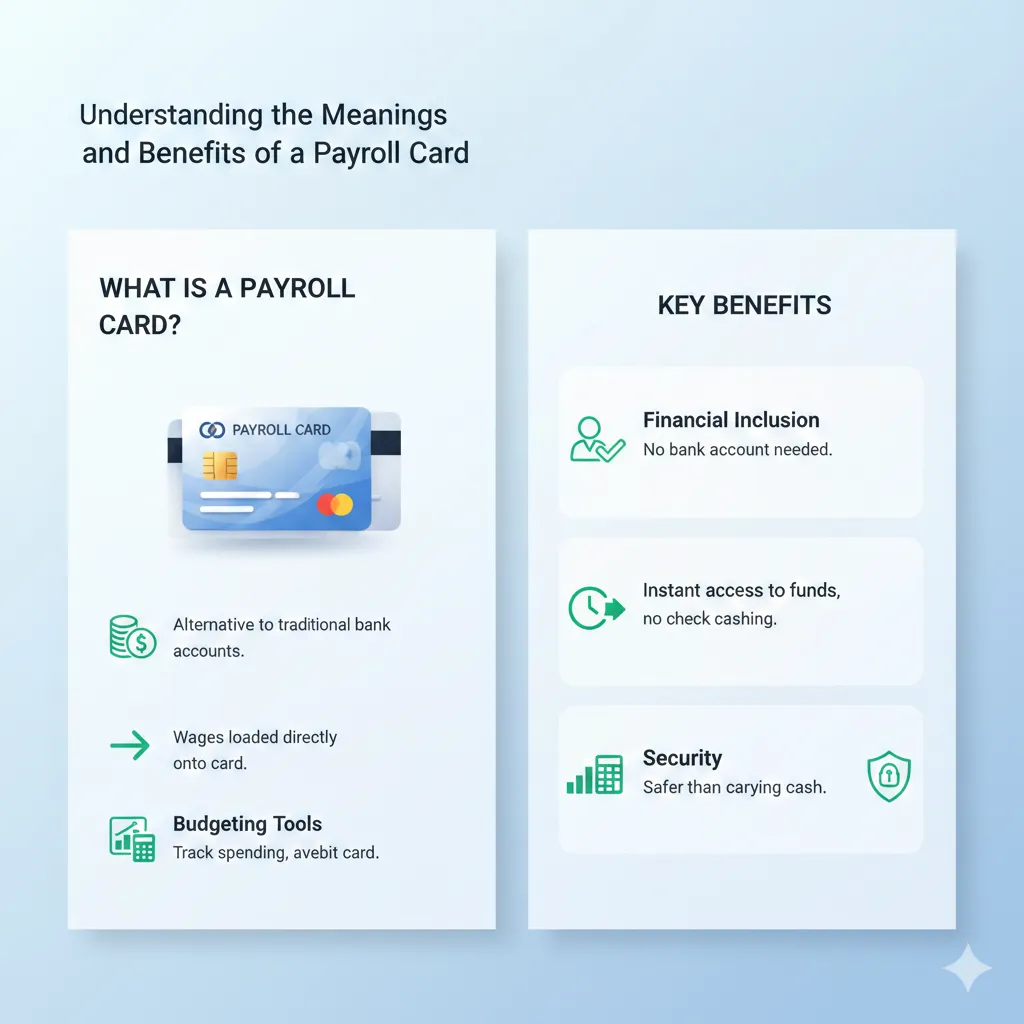
Understanding the meanings and benefits of a Payroll card
-

- by accounting.byte,
- February 17, 2026
- in services,
Usually, employers pay their employees using a cheque, money transfers, or DD; however, in certain cases, when an employer does not want to use these methods, and in this case, s/he uses a payroll card to pay their employees. But there are a number of people who are not sure what a payroll card is and how it works. In this case, you can use this article to learn everything about a payroll card and why employers use this card. Whether you are looking for the advantages of a payroll card or its disadvantages, the guide will provide you with everything you want to know.
Introduction to Payroll Cards
Payroll cards, or pay cards, are pretty much like debit cards that your job loads your paycheck onto. Instead of direct deposit or paper checks, your wages land right on this card every payday. You don’t need a bank account, and you skip the hassle of cashing checks. Employers usually set these up with a prepaid card company or a big payment processor, so it’s all electronic and automatic.
Just like regular debit cards, payroll cards come with some rules. The companies that issue these cards have to tell you upfront about any fees and how you can dispute a charge. If they want to change the terms, they need to give you at least 21 days’ notice. So, you’re not totally in the dark.
Exploring the advantages of a Payroll card
Well, payroll cards have a few perks for both employers and employees, which is why the main reason why they are picked by people.
For employers:
-
Payroll cards cut out the cost of printing and mailing checks, no more paper, ink, or lost check headaches.
-
They make paying remote workers, temps, or new hires easier.
-
Plus, small business owners can spend less time on payroll paperwork and more time actually running their business.
For employees:
Getting paid with a pay card has numerous benefits for employees, such as:
-
Getting their wages even if they do not have a bank account.
-
Accessing funds quickly
-
Pay cards also save time, as people do not have to cash their checks.
-
Easy accessibility, as these cards can be cashed anywhere, such as ATM, shop online, or even used to make automatic payments.
-
Getting a replacement card even if the card is lost or stolen.
-
Preventing overdraft fees since employees can only withdraw what they are paid.
Are there disadvantages to using a Payroll card?
Of course, payroll cards aren’t perfect. Some charge you a fee every time you use them for purchases, get cash back, or pull money from an out-of-network ATM. If someone steals your card, you won’t get your money back right away; you’ll have to wait for your employer to sort it out with the card provider. And not every place accepts payroll cards, so sometimes you’ll have to jump through a few hoops just to pay bills or grab your cash.
This is the basic and essential information that you need to know about a payroll card.
0 Comments:
Leave a Reply