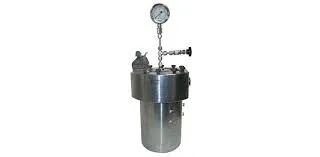
High Pressure Autoclave Reactor: Reliable Equipment for Extreme Reaction Conditions
-

- by trishasutariya,
- February 12, 2026
- in business,
A autoclave reactor is a specially engineered vessel designed to carry out chemical reactions under elevated pressure and temperature. These reactors are essential in industries where reactions require controlled environments beyond atmospheric conditions. They are commonly used in chemical processing, pharmaceuticals, petrochemicals, materials research, and energy sectors.
High autoclave reactors are built to withstand extreme operating conditions while ensuring safety, accuracy, and efficiency in chemical reactions.
What Is a High Pressure Autoclave Reactor?
A high pressure autoclave reactor is a sealed pressure vessel equipped with heating, mixing, and control systems. It allows reactions involving gases, liquids, or solids to occur under controlled high-pressure environments. These reactors are often used for processes such as hydrogenation, polymerization, oxidation, and catalytic reactions.
They are constructed from high-strength, corrosion-resistant materials to ensure durability and safe operation.
Main Components of a High Pressure Autoclave
Pressure Vessel Body
The main chamber designed to handle high internal pressure and temperature.
Closure Mechanism
Includes bolted closures, clamp-type lids, or quick-opening systems to create a secure seal.
Heating System
Electric heaters, steam jackets, or oil jackets are used to achieve and maintain the desired temperature.
Agitation System
Mechanical stirrers or magnetic drives ensure uniform mixing of reactants.
Pressure and Temperature Controls
Sensors, gauges, and automated control units monitor and regulate internal conditions.
Safety Devices
Pressure relief valves, rupture discs, and emergency shutdown systems prevent overpressure and accidents.
Common Materials of Construction
-
Stainless Steel 316 or 316L – For general high-pressure chemical processes
-
Stainless Steel 304 – For less corrosive environments
-
Hastelloy Alloys – For highly corrosive chemicals
-
Inconel Alloys – For high-temperature and high-pressure conditions
-
Titanium – For specialized and highly corrosive applications
Material selection depends on operating pressure, temperature, and chemical compatibility.
Typical Specifications
| Parameter | Details |
|---|---|
| Pressure Range | Up to 1000 bar (depending on design) |
| Temperature Range | Up to 500°C (approx.) |
| Capacity | From 100 ml to several thousand liters |
| Operation Mode | Batch or continuous |
| Heating Type | Electric, steam, or oil jacket |
| Agitation | Mechanical or magnetic drive |
Industrial Applications
Chemical Processing
Used for hydrogenation, polymerization, and specialty chemical production.
Pharmaceutical Industry
Essential for synthesis, sterilization, and high-purity reactions.
Petrochemical Sector
Applied in catalytic and high-pressure reaction systems.
Energy and Fuel Research
Used in biofuel, hydrogen, and synthetic fuel production.
Material Science
Used for testing new materials under extreme conditions.
Key Advantages
-
Supports reactions at high pressure and temperature
-
Enhances reaction speed and yield
-
Provides accurate process control
-
Suitable for hazardous or sensitive reactions
-
Built with advanced safety mechanisms
Conclusion
High pressure autoclave reactors are critical for industrial and laboratory processes that require controlled high-pressure environments. Their robust construction, precise control systems, and advanced safety features make them indispensable in chemical, pharmaceutical, and research applications.
Choosing the right material, pressure rating, and design ensures safe operation, improved reaction efficiency, and long-term performance in demanding industrial conditions.
0 Comments:
Leave a Reply