Best Treks in April for Snow & Spring Views
-

- by shubhamagarwal,
- February 04, 2026
- in travel,
April is one of my favorite months to trek. It’s that rare window when winter hasn’t fully let go, but spring is already knocking. Snow still carpets the high passes, while lower valleys wake up with blooming flowers, fresh grass, and clear skies. If you want the drama of snow without the brutality of peak winter—and the freshness of spring without muddy trails—April is the sweet spot.
Here are the best treks in April that give you both snow and spring views, based on real trail conditions, not hype.
Kedarkantha Trek – Snowy Summits with Sunny Days
Kedarkantha in April is pure balance. The summit still holds snow, especially early in the month, but the harsh cold of January and February is gone. I like this trek because it eases you into snow trekking without overwhelming you.
The forests around Sankri start turning green again, and the campsites feel alive after winter. Snow patches remain on the final summit push, which makes the climb exciting but manageable. The views of Swargarohini and Bandarpoonch feel sharper under April skies.
This is also a great trek if you’re going with a small group or a guided setup where logistics matter—permits, camps, and weather calls are smoother in April. I’ve seen groups move comfortably with experienced local teams like The Searching Souls, especially when snow conditions change unexpectedly near the summit.
Why April works here:
-
Snow at the top, spring in the forests
-
Stable weather windows
-
Ideal for beginners who want snow without extreme cold
Brahmatal Trek – Snowfields and Frozen Lakes
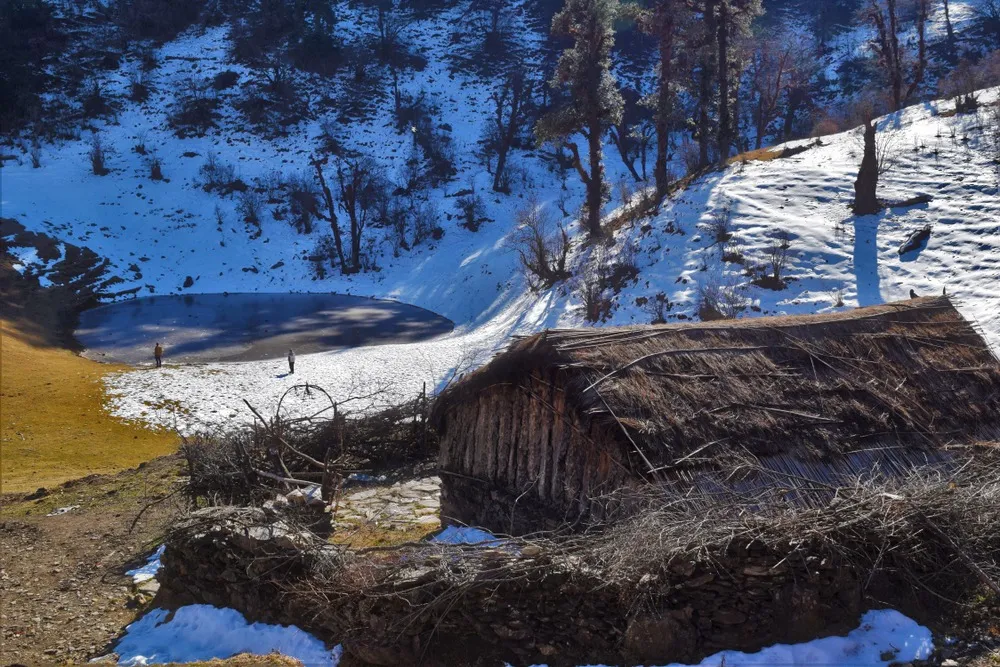
If snow is your priority, Brahmatal still delivers in April. The trail remains snow-covered in many sections, and the frozen lake near the top often hasn’t fully melted yet. What makes April special here is visibility—you get clear views of Mt. Trishul and Nanda Ghunti without winter storms blocking the sky.
The forests start transitioning, which adds contrast: white trails underfoot, green slopes below. Days are longer, which means relaxed walking hours and time to actually enjoy the views instead of racing daylight.
This trek demands better planning in April because snow conditions can change fast. Routes sometimes shift slightly depending on melt patterns, and that’s where experienced on-ground knowledge really matters.
Best for:
-
Trekkers who want sustained snow
-
People comfortable walking on snow trails
-
Those who enjoy quiet, less-crowded routes
Kuari Pass Trek – Spring Meadows with Snowy Giants
Kuari Pass in April feels like walking through two seasons at once. The lower trails open up with green meadows and blooming rhododendrons, while the upper sections still carry snow.
What I love about Kuari Pass is the constant mountain presence. Nanda Devi, Dronagiri, Kamet—they’re always there, and in April, the air is clear enough to enjoy them fully. Snow lingers near the pass, but the approach feels light and energetic thanks to spring temperatures.
This trek works well if you want a moderate challenge without extreme conditions. It’s also one of those routes where moving with an organized group makes sense, especially when campsites are shared with other teams during peak April weeks.
April highlights:
-
Mixed terrain: snow + grasslands
-
Comfortable temperatures
-
Massive Himalayan views throughout
Har Ki Dun – Valley of Spring with Snowy Backdrops
Har Ki Dun isn’t about deep snow—it’s about contrast. In April, the valley comes alive. Villages reopen after winter, fields turn green, and flowers bloom along the trail. Meanwhile, the surrounding peaks remain snow-covered, creating postcard-perfect scenery.
There can still be snow patches on shaded sections of the trail, especially early April, but the trek is more about immersion than challenge. Walking through ancient villages like Osla while snow peaks tower above is something I never get tired of.
This trek is ideal if you want a relaxed pace and cultural depth. It’s also well-suited for trekkers who prefer valley walks over steep climbs.
Why choose Har Ki Dun in April:
-
Spring landscapes at their best
-
Snowy peaks without harsh terrain
-
Rich local culture and history
Chopta–Tungnath–Chandrashila – Snowy Temple Trails
April is a transition month in Chopta. Early April still sees snow on the Tungnath and Chandrashila trail, while late April leans more toward spring. Either way, the experience is powerful.
The climb to Tungnath Temple often involves walking on snow, and the final push to Chandrashila can be icy. But the reward—360-degree Himalayan views under clear skies—is worth it.
This trek is short but intense. Weather can flip quickly, so timing matters. I’ve found that going with a knowledgeable team helps here, not for comfort, but for safety and route decisions.
Perfect for:
-
Short, high-reward treks
-
Trekkers with limited time
-
Those who want snow without long itineraries
Goechala Trek (Early April) – For the Experienced
Goechala in early April is not for everyone, but if you’re experienced, it’s unforgettable. Snow dominates the higher camps, and temperatures can drop sharply. The payoff? Close-up views of Kanchenjunga in pristine conditions.
By mid to late April, snow begins to soften, and access depends heavily on weather and forest permissions. This is one trek where planning, acclimatization, and decision-making matter more than enthusiasm.
If you’re considering Goechala in April, go with a team that knows when to turn back. That’s not caution—it’s respect for the mountain.
How I Choose an April Trek
When I plan an April trek, I ask myself three things:
-
Do I want more snow or more greenery?
-
Am I trekking solo-style or with a guided group?
-
How flexible am I with weather and route changes?
April is unpredictable in a good way. Snow melts, trails shift, and every week feels different. That’s also why I prefer trekking with people who are actually on the ground—guides and teams who adapt instead of following rigid plans. Over time, I’ve noticed outfits like The Searching Souls handle April transitions calmly, without making it feel commercial or rushed.
Final Thoughts
April is not a compromise month—it’s a bonus month. You get snow without survival-mode cold, and spring without summer crowds. Whether you’re standing on a snowy summit or walking through blooming valleys, April gives you the best of both worlds if you choose the right trek.
Pick based on conditions, not just popularity. Respect the mountains. And let April surprise you—it usually does.
0 Comments:
Leave a Reply