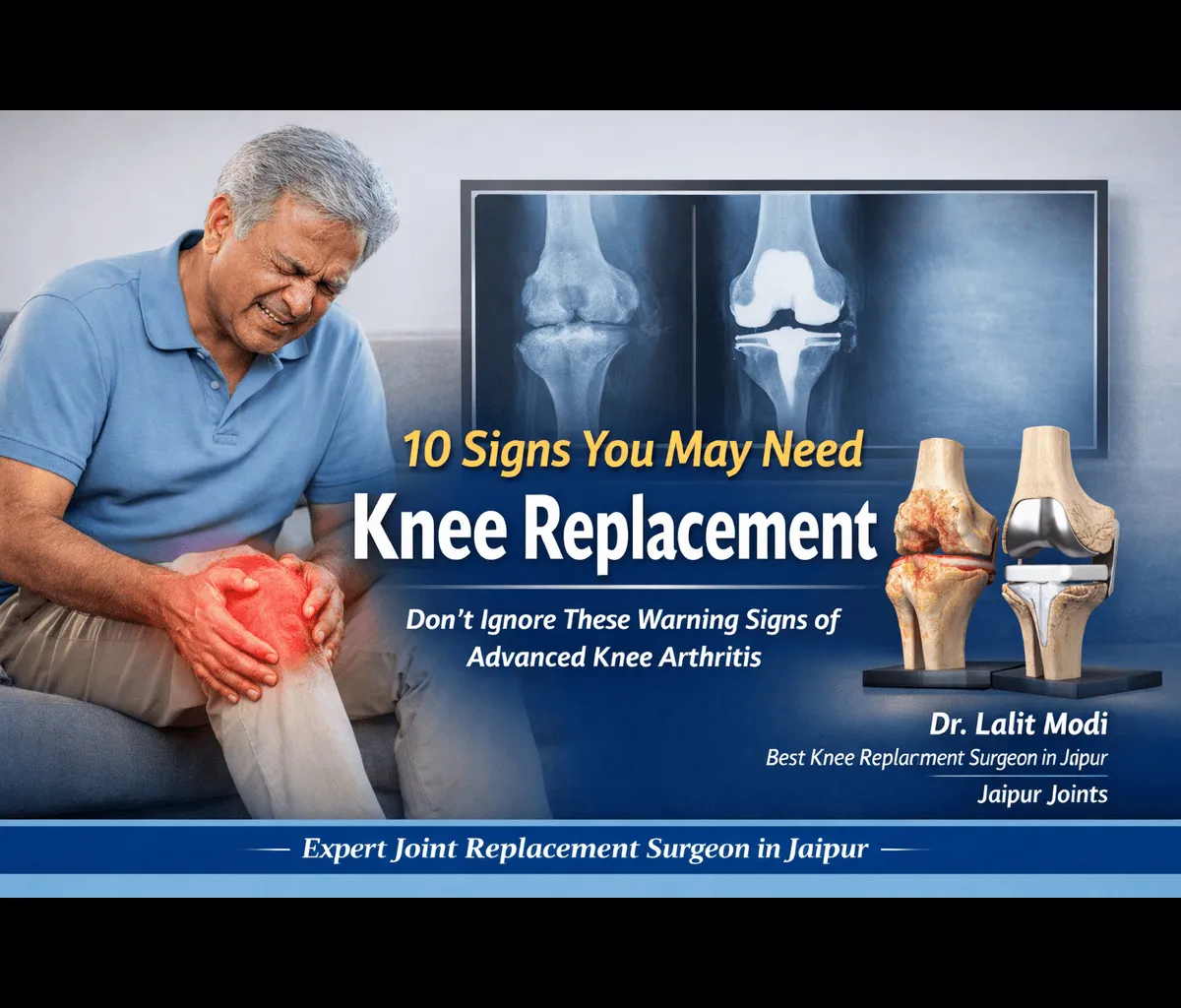
10 Signs You May Need Knee Replacement
-

- by drlalitmodi,
- February 16, 2026
- in health,
Knee pain is one of the most common orthopedic problems affecting adults over 40. While many cases improve with medication, physiotherapy, or lifestyle changes, some patients reach a stage where conservative treatment no longer provides relief. In such cases, timely surgical intervention can significantly improve mobility and quality of life.
If you are experiencing persistent discomfort, here are 10 important signs that you may need knee replacement — and when it is time to consult a specialist.
1. Persistent Knee Pain That Doesn’t Improve
Occasional knee pain after exertion is normal. However, if pain continues for months despite rest, medication, or physiotherapy, it may indicate advanced cartilage damage. Chronic pain that interferes with daily activities is one of the strongest indicators for Knee Replacement Surgery in Jaipur.
2. Difficulty Walking or Climbing Stairs
If simple activities like walking short distances, climbing stairs, or getting up from a chair have become painful, your knee joint may have significant wear and tear. Progressive osteoarthritis often causes this limitation.
3. Knee Stiffness, Especially in the Morning
Morning stiffness that lasts more than 20–30 minutes may suggest advanced arthritis. When stiffness becomes constant and reduces flexibility, surgical options may need to be considered.
4. Swelling That Does Not Subside
Recurring swelling despite medication or injections is a sign of ongoing joint inflammation. Persistent fluid buildup can indicate severe joint degeneration.
5. Bowing of the Legs (Deformity)
If your knees appear bowed inward or outward, it may be due to uneven cartilage loss. Visible deformity is often seen in late-stage osteoarthritis and is commonly corrected through Knee Replacement Surgery in Jaipur.
6. Pain at Rest or During the Night
Early arthritis causes pain during activity. Advanced arthritis causes pain even while resting or sleeping. Night pain is a red flag that the joint damage has progressed significantly.
7. Limited Range of Motion
If you are unable to fully bend or straighten your knee, it may indicate joint surface destruction. Reduced mobility affects independence and overall lifestyle.
8. Dependence on Painkillers
Regular use of pain medications to manage knee pain is not a long-term solution. If you find yourself relying on daily medication for relief, it is important to consult a Joint Replacement Surgeon in Jaipur for proper evaluation.
9. Failure of Non-Surgical Treatments
Physiotherapy, weight loss, injections, braces, and medications are effective in early stages. However, if these treatments fail to provide long-term relief, surgery may be the next step.
10. Reduced Quality of Life
When knee pain prevents you from enjoying social activities, walking comfortably, traveling, or performing routine work, it directly impacts your mental and physical well-being. Restoring joint function can dramatically improve quality of life.
Understanding When Surgery Becomes Necessary
Knee replacement is typically recommended in advanced osteoarthritis, rheumatoid arthritis, or severe post-traumatic arthritis where the cartilage is completely worn out. The procedure involves replacing damaged joint surfaces with artificial implants designed to restore smooth movement.
Modern surgical techniques have made recovery faster and outcomes more predictable. With proper rehabilitation, most patients regain mobility and return to normal activities within weeks to months.
Why Early Consultation Matters
Delaying treatment can lead to worsening deformity, muscle weakness, and reduced recovery potential. Consulting an experienced Joint Replacement Surgeon in Jaipur ensures accurate diagnosis through clinical evaluation and imaging studies such as X-rays.
Choosing the Best Knee Replacement Surgeon in Jaipur is essential for optimal surgical planning, implant selection, and long-term joint function.
Expert Care at Jaipur Joints
At Jaipur Joints, patients receive comprehensive evaluation and personalized treatment planning. Dr. Lalit Modi, recognized as the Best Knee Replacement Surgeon in Jaipur, has extensive experience in managing complex knee arthritis cases using advanced surgical techniques.
As a trusted Joint Replacement Surgeon in Jaipur, Dr. Lalit Modi focuses on precise diagnosis, minimally invasive approaches where appropriate, and structured rehabilitation protocols to ensure better functional outcomes.
Patients seeking Knee Replacement Surgery in Jaipur benefit from thorough pre-surgical assessment, transparent guidance, and post-operative care aimed at faster recovery and improved mobility.
Final Thoughts
Knee replacement is not the first solution — but it is often the most effective solution when conservative treatments fail. Recognizing early warning signs helps patients make informed decisions and avoid prolonged suffering.
If you identify with multiple signs listed above, a professional evaluation can clarify whether surgery is necessary or if alternative treatment options are still viable.
0 Comments:
Leave a Reply